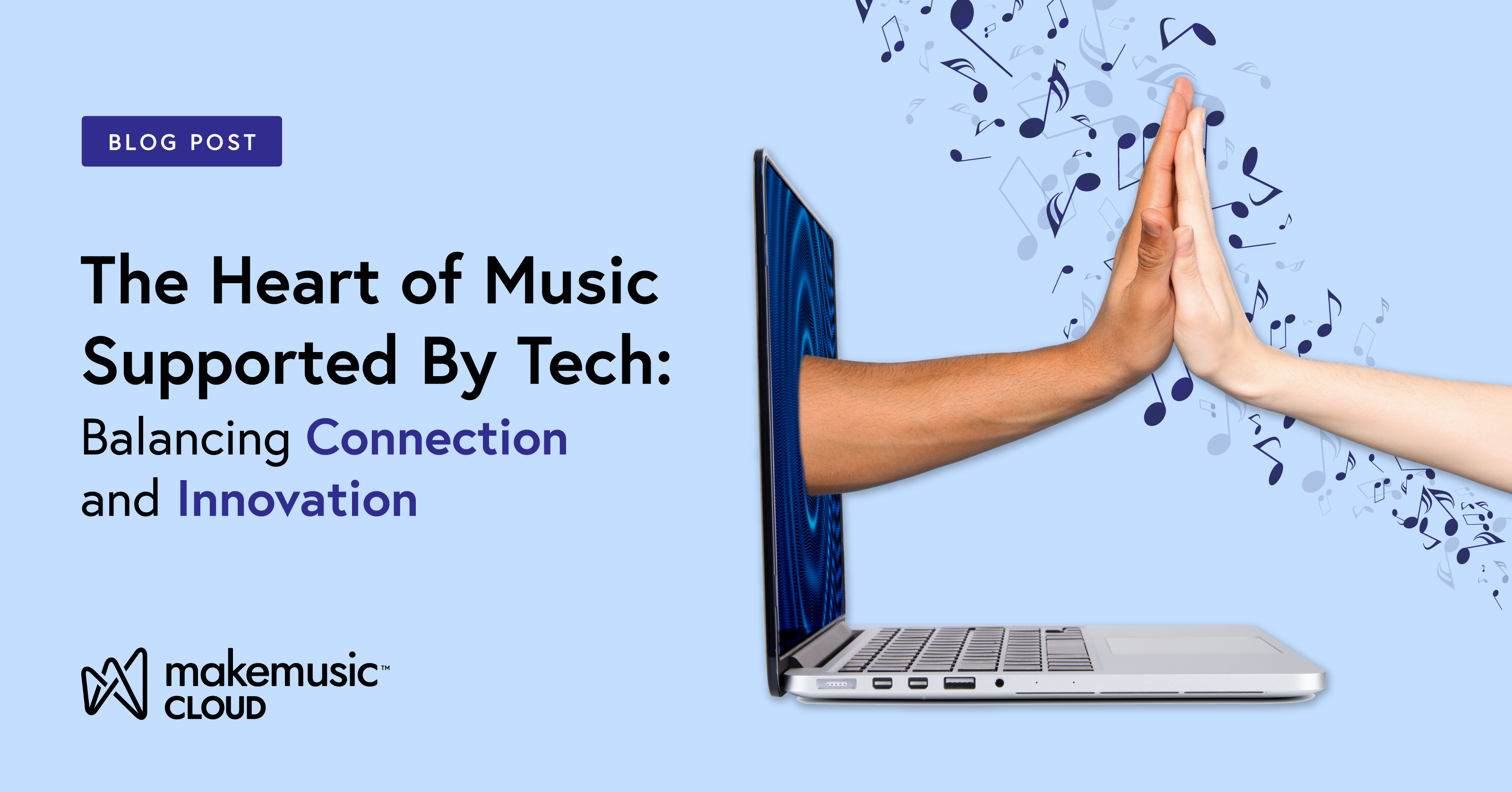
As technology tools become more prevalent in the classroom, it’s easy to wonder: where does the “human connection” go? Music-making is a heart-to-heart tradition passed down through generations. However, modern music ed tech isn’t here to replace the teacher—it’s here to act as a pivotal support system that helps students thrive musically between rehearsals.
What an exciting time to be supporting the next generation of music-makers! The magic is what happens when your pedagogy and these digital tools work in perfect harmony.
Ed Tech Tools as Your Teaching Assistants
Think of technology as your Digital Assistant Director. You are the brains of the operation, but you can leverage powerful tools to automate repetitive tasks like initial pitch and rhythm assessment. This gives you data-backed insights needed to decide exactly what your students need during the next rehearsal.
Strategic Tip: To avoid “tech fatigue,” implement just one new tool per grading period. Focus on deep adoption over wide, shallow usage.
4 Ways to Drive Innovation in Your Ensemble
How are you evolving your classroom this year? Here are four ways to use MakeMusic Cloud to solve some common pedagogical challenges:
Empowering student creativity
Students can be intimidated by a blank staff. Use the Compose tool in MakeMusic Cloud—included with all subscriptions—as a “composition playground.” It allows budding composers to get creative and experiment with notation in a low-stakes, nurturing environment.
Boosting independent musicianship
The biggest challenge for any director is what happens when the student leaves the room. The Practice tool provides instant, colored note feedback, acting as a direct supervisor for home practice. With integrated fingering charts and pitch references, students spend less time guessing and more time growing.
Emphasizing student leadership
Equip your section leaders to be “DJs of the Podium.” Using the Practice tool, a student leader can manage the counting-off, metronome, and professional accompaniment tracks, allowing them to focus on listening and playing themselves before facilitating group feedback.
Drive Program Retention
Students stay in programs where they feel successful and connected. Transform scales and fundamental practice into a cinematic experience with The Foundations Series by Brian Balmages. By setting technical exercises to engaging soundtracks, we’ve seen users double their practice time—proving that engagement is the key to retention.
Bonus: students who have fun together create bonds and then want to keep the fun going year to year in their music program.
From the School to the Community: True Involvement
Technology is the “how,” but the community is the “why.” When students perform at local care facilities or hospitals, the audience remembers the feeling of the music, not the specific rhythms.
By using robust tools like Sight Reading Studio and tracking progress with the Gradebook early in the journey, you ensure students have the technical fluency to focus on that emotive, human connection. As the saying goes: “The best time to plant a tree was 20 years ago; the second best time is now.” It’s never too early to put helpful supports in place!
Working Smarter, Not Harder
In a world in need of more humanity, bringing technology into the classroom isn’t “phoning it in”—it’s working smarter. These tools allow fundamental practice to feel like a real-life performance. They provide the safety net that lets students take musical risks, and a healthy risk is where growth happens.
Do You Know a “Spark” in Music Education?
We are officially searching for the 2026 Spark Award winner! This award honors an innovative educator who is igniting a passion for music and bridging the gap between the classroom and the community.
Who should you nominate? A peer who uses technology to enhance (not replace) human connection, who ignites a passion for music in their students, and who brings that music out into their community.
Timeline: Nominations open April 20, 2026
Award: It only takes 5 minutes to nominate a hero who always puts their students first.