Are you at the point where you’re ready to bribe your kids to practice? You’re not alone!
For many music teachers, the struggle to get students to practice outside of class is all too familiar. Between limited rehearsal time, large ensembles, and competing priorities in students’ lives, it can feel like you’re always one step behind. However, independent practice is one of the most powerful tools for growth, not just in musical skill but also in developing self-discipline and confidence.
Let’s look at why students struggle with practicing, why it matters so much, and how you can build habits that stick.
The Importance of Independent Practice
Many teachers don’t get to see their students as often as they’d like. Whether you meet with students once a day or once a week, classroom time is precious. Independent practice helps bridge the gap created by limited class time, giving students ownership of their learning.
1. Parent and Student Buy-In
When parents see their child’s progress, they recognize the value of your program and become stronger partners in supporting practice at home. Regular communication, through open houses, newsletters, or classroom updates, helps keep everyone aligned on expectations and progress.
You can also build excitement by letting families know what pieces students are preparing for concerts or festivals. The more parents are excited to see the results, the more likely they are to encourage consistent practice.
For families interested in extra help, suggest exploring private lessons through trusted networks or tools like Fons to connect with qualified instructors.
2. Educational Benefits and Life Skills
Independent practice builds much more than musical ability. It teaches persistence, problem-solving, time management, personal responsibility, and many other valuable skills.
These skills benefit students in every area of life and are essential to develop while they’re young.
Want to dig deeper? Read our blog on The 10 Benefits of Music Education for Students.
3. Teamwork and Ensemble Success
Individual effort fuels collective success. When each student puts in time outside the classroom, your ensemble grows stronger together. Students quickly see that their preparation contributes to the group’s overall sound, which reinforces accountability and pride.
4. A Lifelong Love of Music
Encouraging students to practice independently plants the seed for a lifelong relationship with music. When they see the progress that comes from consistent effort and enjoy the process of creating, it transforms practice from a chore into a personal passion.
In MakeMusic Cloud, that journey becomes even easier. Students can explore interactive tools, track their growth, and experience the satisfaction of seeing their scores and feedback improve with every session.
Why Students Struggle
Even the most dedicated students face obstacles when it comes to practicing regularly. Outside the classroom, their time and attention are pulled in many directions, and practice often competes with higher-priority demands or simple fatigue.
Common barriers include:
- Busy schedules: Between sports, homework, and extracurriculars, practice time can slip away quickly.
- Lack of motivation: Some students simply don’t see the value yet, or need help connecting the dots between effort and results.
- Environment: Not every student has a quiet, supportive space for music at home.
- Forgetfulness: Instruments, sheet music, or reeds left at school can derail even good intentions.
Understanding these barriers helps you design solutions that meet students where they are.
5 Ways to Get Students to Practice Outside The Classroom
Practice doesn’t have to feel like a chore! Here are five teacher-approved strategies that make it engaging, accessible, and meaningful:
1. Use Music They Want to Play
Sometimes, all it takes to motivate students to practice is music they already love.
Popular songs, movie themes, or seasonal favorites can grab attention and make practice feel like a reward instead of a requirement.
Try this:
- Use a “Fun Friday” rotation where students sight-read or rehearse a popular piece once a week.
- Let them vote on which familiar melody becomes the warm-up for the month.
- Encourage students to explore music they know inside MakeMusic Cloud’s digital music catalog, where they can find arrangements that match their skill level and play along with professional recordings.
When students feel connected to what they are playing, they are more likely to pick up their instrument on their own time.
2. Incorporate Technology
When students can practice anywhere using their phone, Chromebook, or tablet, they are much more likely to follow through. Technology removes barriers like missing sheet music or a lack of immediate feedback.
Try this:
- Assign practice tasks in MakeMusic Cloud that give students immediate and encouraging feedback.
- Encourage students to use headphones and play with accompaniment tracks for an authentic experience.
- Have them track their progress online so they can see their consistency throughout the week.
Students enjoy seeing their improvement in real time. When they have access to tech that helps them accomplish that, practice becomes a more engaging and self-rewarding process.
3. Give Them a Say
Choice builds ownership. When students have a voice in what they play or how they learn, practice becomes personal rather than an assignment.
Try this:
- Host a “song bracket” where the class votes on which piece they will work on next.
- Offer practice choice boards with categories such as technique, creativity, and reflection.
- Let small groups pick a short piece to rehearse independently and perform for the class.
While giving students freedom, ensure they also understand the purpose behind practice. Connect their work outside of class to tangible outcomes such as stronger tone quality, tighter ensemble rhythm, or more confident performances. Help them set realistic goals like “Play my concert piece without stopping by next Thursday.”
4. Add a Challenge or Incentive
A little friendly competition can boost engagement and accountability. Recognition and rewards help students stay motivated without pressure.
Try this:
- Create a “First to Master It” leaderboard for scales or key sections.
- Begin class with a short “Show and Tell” where volunteers perform something they practiced independently.
- Offer simple rewards, such as stickers, treats, or shout-outs, for achieving milestones (it’s bribery adjacent 😉)
These positive reinforcements turn practice from an obligation to an opportunity.
5. Show Them How to Practice
Even the most motivated student cannot improve without knowing what effective practice looks like. Teachers can model strong habits during class so students understand exactly how to approach practice on their own.
Try this:
- Demonstrate the difference between “playing through” and true practice by isolating one difficult measure and looping it slowly.
- Teach a simple three-step process: identify the issue, fix it, and reinforce it correctly three times.
- End class with five minutes of guided self-practice where students work on one short goal while you circulate to offer quick feedback.
When students learn how to practice efficiently, they can apply those skills confidently outside the classroom.
Bonus Tip: Build a regular routine around practice. Dedicate time each week for reflection or goal setting so students begin to think like independent musicians.
Planning ahead for summer? Check out Boost Summer Practice with MakeMusic Cloud: A Band Director’s Guide to Keeping Students Engaged for creative ways to keep momentum going when school’s out.
10 Practice Tips for Music Students
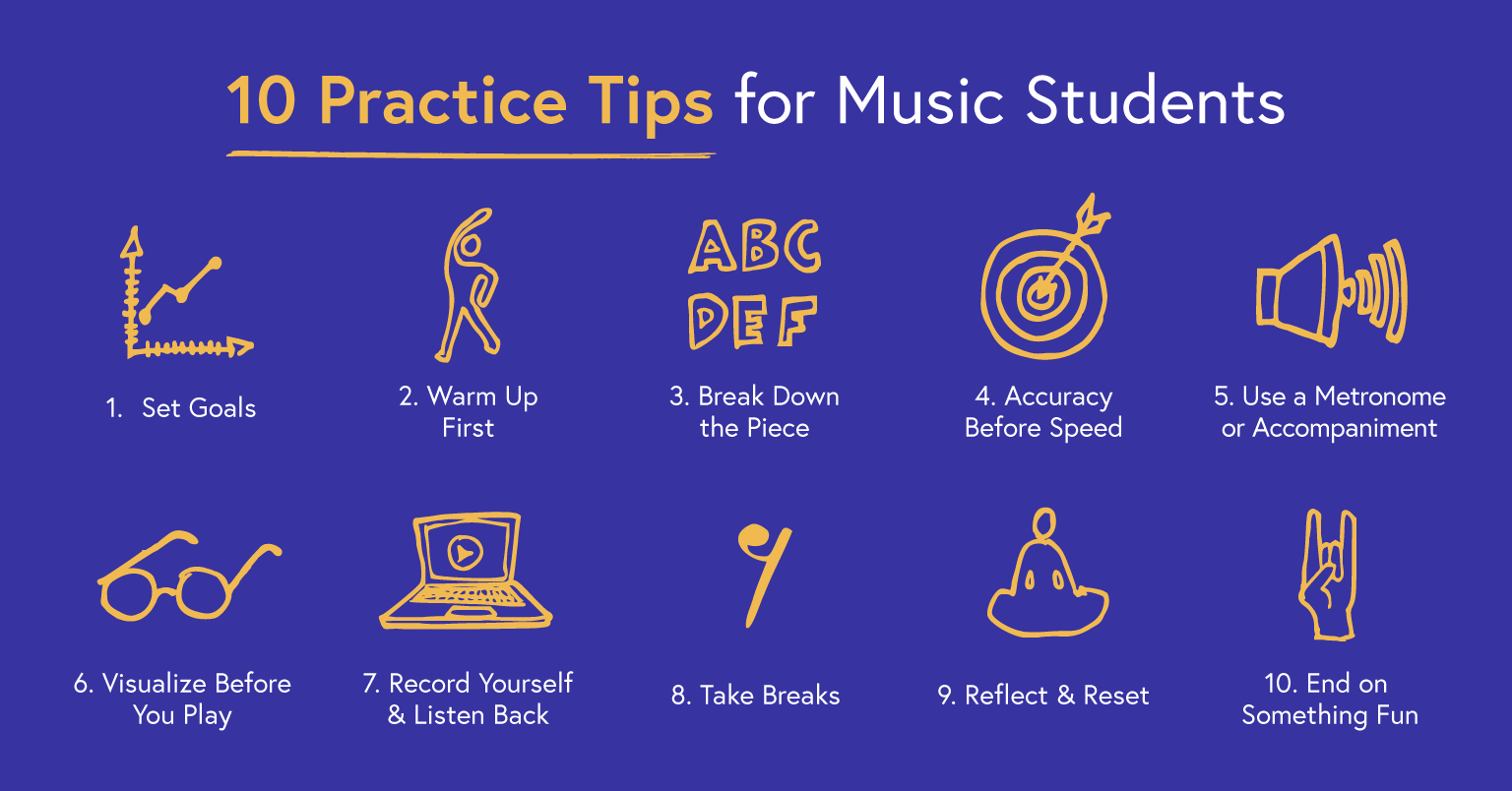
To help with the “how,” we’ve put together 10 practice tips you can share with your students to guide practice and give them somewhere to start.
- Set a Goal. Decide what you want to accomplish before you start. Focus on one skill, one section, or one challenge at a time.
- Warm Up First. Play long tones, scales, or rhythm patterns to get your mind ready to work.
- Break It Down. Work in short chunks instead of running the whole piece every time. Focus on the difficult sections first.
- Go Slow to Go Fast. Accuracy matters more than speed. Begin slowly and increase the tempo once you get more confident.
- Use a Metronome or Accompaniment Track. Keep a steady tempo and develop strong rhythmic accuracy. Tools in MakeMusic Cloud can help you practice in time and stay consistent.
- Visualize Before You Play. Close your eyes and imagine how the notes sound or how your fingers move to connect your mind and body.
- Record Yourself. Listening back helps you catch mistakes and hear real progress over time.
- Take Breaks. Short bursts of focused effort (10–15 minutes) are more effective than one long, distracted session.
- Reflect and Reset. After each session, ask: “What improved today? What should I focus on next time?”
- End on Something Fun. Finish each practice by playing your favorite piece, riff, or theme so you end feeling encouraged and ready to return.
Adapting These Strategies for Any Grade Level
Elementary
At this stage, students are developing basic coordination and focus skills. They thrive on routine, visual reinforcement, and engaging repetition. The goal is not long practice sessions but short bursts of activity that create positive associations with music.
What Works:
- Keep it short and fun. Recommend five to ten minutes of focused practice each day. Use games such as “Can you beat your score?” or “Play the line three times without stopping.”
- Make it visual. Build a “Practice Adventure Map” on the wall where students move their name up a path each time they practice. You can theme it around a journey (to a concert, a castle, outer space, etc.).
- Add movement. Young students learn through motion. Incorporate clapping, stepping, or simple choreography while counting rhythms to strengthen timing and coordination.
- Connect sound to story. Use imagination prompts like “What animal does this piece sound like?” or “How would you play this if it were part of a parade?” Storytelling makes practice memorable.
Middle School
Middle school students crave independence but still need guidance. This is a crucial age when many students decide whether to stay in music, so keeping it relevant and rewarding is key.
What Works:
- Gamify practice. Create classroom leaderboards, track practice streaks, or create team challenges. Anything that will keep them focused on achieving their next goal.
- Set individual goals. Help students set weekly or monthly targets, such as “improve tone on long notes” or “play a passage with 95 percent accuracy.” Review progress together to build ownership.
- Incorporate familiar music. Use short excerpts from popular songs during warm-ups or rhythm drills to connect class concepts with what students already enjoy listening to.
- Encourage reflection. Have students write or share one thing they improved this week and one skill they want to focus on next. Reflection helps them recognize their own growth.
High School
By high school, students are ready to think critically about their musicianship. They can set goals, manage time, and evaluate progress, but they also face heavier workloads and outside responsibilities. Practice needs to feel purposeful and directly tied to their growth as musicians.
What Works:
- Connect practice to real goals. Relate individual work to auditions, ensemble placement, or scholarship preparation so students see how effort leads to long-term results.
- Promote self-assessment. Have students record themselves and write brief reflections on tone, phrasing, or accuracy. This builds awareness and independence.
- Develop peer leadership. Assign section leaders to mentor younger players or guide small-group rehearsals. Leadership builds accountability and teamwork.
- Cultivate artistry. Discuss phrasing, dynamics, and musical storytelling so students move beyond accuracy and begin to think like expressive, creative musicians.
Want more ideas for keeping students motivated and focused in class? Read Student Engagement in Music Class: Best Strategies and Benefits for practical ways to re-energize rehearsals.
How MakeMusic Keeps Students Motivated
Independent practice becomes easier and more rewarding when students have the right tools. MakeMusic Cloud transforms solo work into interactive, engaging learning that keeps both students and teachers inspired.
What Makes It Work:
- Real-Time Feedback. Students can instantly see and hear how they are doing, which helps them correct mistakes and stay motivated.
- Professional Accompaniments. Backing tracks make practice feel like a real performance experience.
- Practice Tracking. Teachers can view each student’s practice minutes and progress before and after assignments, keeping everyone on track.
- Gamified Experience. Students enjoy watching their scores improve as they play and love seeing visible proof of their growth.
- Accessible Anywhere. Students can practice at school, at home, or on the go without needing printed music.
- Dori the Cat. Dori’s friendly presence throughout the platform helps make practice time approachable and fun for younger learners.
With tools that make progress visible and feedback instant, MakeMusic Cloud helps every student feel successful while giving teachers valuable insights into their growth.
Ready to See the Difference?
Help your students build stronger practice habits and discover the joy of independent learning.
Start your free 30-day trial of MakeMusic Cloud today and see how the right tools can transform the way your students practice.