You know your students best. You have your scope and sequence mapped out, you know which skills need more time, and you have a vision for where your orchestra is headed. What you may not have time for is hunting down enough quality material to bring that vision to life.
Here’s the good news: with MakeMusic, you have access to hundreds of methods, trusted resources, and sight reading materials to help your plans take shape. Let’s dive in.
Popular String Methods
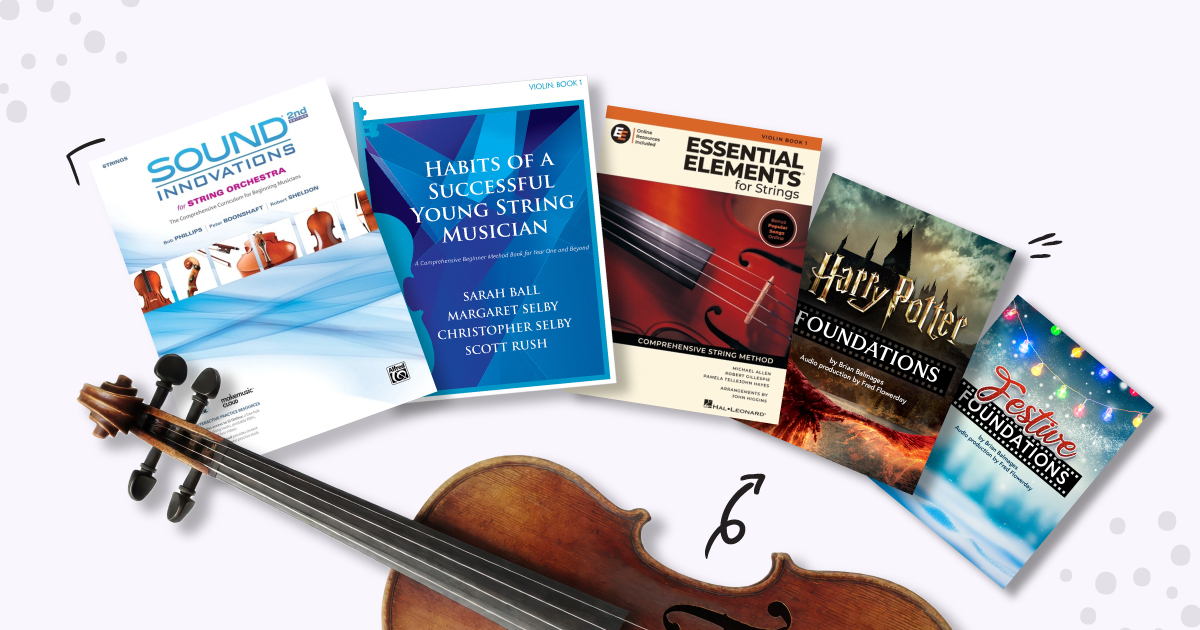
Let’s start with the classics. Some of our most popular string methods include:
Sound Innovations for String Orchestra, Second Edition
Habits of a Successful Young String Musician
Habits of a Successful Middle Level String Musician
Essential Elements for Strings
…and more!
Still using the first edition of Sound Innovations? No problem. Download free inserts for your older edition books here (band and orchestra), so what students see on the page matches what they see on the screen. No confusion, no “wait, which exercise are we on?” moments.
Ready to explore? Have a look through all of the available string methods here.
A tip worth trying: use method books in coordination with one another.
When you do, students suddenly have far more practice opportunities on the skills you’re focusing on. And sometimes a slightly different presentation is all a student needs for something to finally “click.” If your violas are struggling with a particular bowing pattern, a second or third take on that same skill from another book might be the key.
Foundations: Practice Students Actually Want to Do
Speaking of multiple ways to practice a focus skill, you won’t want to miss The Foundations Series by Brian Balmages.
The recipe is simple: pedagogically sound exercises paired with epic, cinematic accompaniments that add up to a truly engaging practice experience. Fred Flowerday produced all of the accompaniments, so your students feel like they’ve been dropped onto the big screen while they work on something fundamentally sound.
And students really do love them. In fact, they demonstrate twice the practice time when they engage with Foundations. They’re also a great resource during class time. Think reward, celebration, and plain old engagement (the kind that makes a Friday rehearsal a little easier).
A variety of string-focused Foundations releases are available:
- Mega Foundations
- Spooky Foundations
- Festive Foundations
- Villainous Foundations
- Harry Potter Foundations
- Harry Potter Foundations: Daily Routines
- Foundations: Essential Edition
- Foundations: Habits Edition
- Marvel Foundations
- Coming soon: Foundations: Sound Innovations Edition
Sight Reading Resources Worth Knowing About
Sight Reading Studio is included with every MakeMusic subscription, and it’s a great place to start. But there are also some dedicated sight reading resources that string teachers will want to know about:
Habits of a Successful Young String Musician Sight Reading Generator
Sound Innovations String Orchestra, Book 1 (Second Edition) Sight Reading Generator
Both include directly correlated sight reading templates that supplement each line in the main method book. Your students can practice the same skills the method teaches, again and again, without running out of fresh material. Talk about extending practice!
The Magic of MakeMusic: Bringing It All Together
Here’s the best part of a MakeMusic subscription: you can use all of these resources in your classes. You don’t have to pick just one or two. Mix, match, and build what your students need.
Here’s how to make it manageable:
- Compile your favorite exercises into Playlists. We recommend organizing them into skill-focused groups (think shifting, bow distribution, high 2s, or rhythm reading, etc) for best results. Playlists have a 50 title limit, so smaller, focused playlists work well anyway.
- Save your favorite method books with the heart icon. Here’s how.
- Pin your chosen Playlists and favorite methods to your classes so students have easy access to exactly what you want them practicing.
Think about what this looks like in practice. Say your second-year violins are ready for shifting, but your primary method only torches on it briefly. Pull shifting exercises from a few different methods, add a Foundations exercise for fun, and drop them into one Playlist. Pin it to the class, and your students have a custom unit without you spending a Sunday afternoon writing out exercises.
You can organize Playlists by concept rather than by book, build separate ones for violins, violas, cellos, and basses when their needs differ, or layer difficulty by starting with simpler versions of a skill and moving up to more challenging ones.
Best of all, your Playlists and Favorites stay with your account, so you can use them year after year. Tweak them as your teaching evolves, but the foundation is already done. What a great way to boost efficiency!
Ready to Plan?
You already know what your students need. With a huge variety of string methods and practice tools that students actually enjoy, MakeMusic makes customizing your curriculum easier than ever.
It’s time to get planning. Log in or start a free trial today to begin.