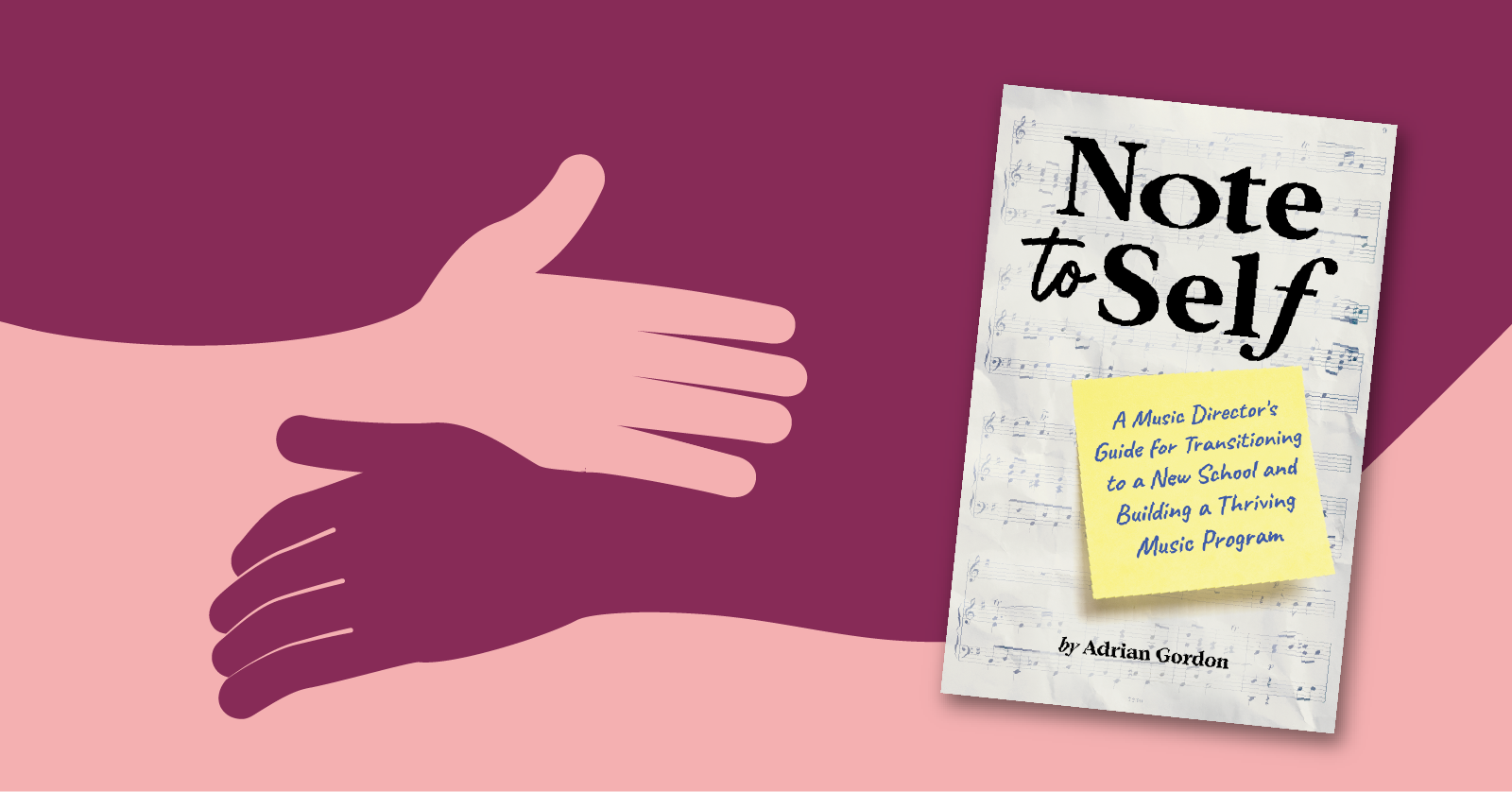
This blog is adapted from an excerpt of Adrian Gordon’s new book, Note to Self.
Self-care is the most important guiding principle to have as a music educator.
This blog is adapted from an excerpt of Adrian Gordon’s new book, Note to Self.
Self-care is the most important guiding principle to have as a music educator.

Music Educators are busy people! When you use MakeMusic Cloud (SmartMusic) with your students, you are empowering them to use high-quality resources, self-assess, and self-correct with the assistance of our powerful suite of tools.
My parents have had the same hairstyles for over 50 years. They’re incredibly immune to cultural pressure to change and phenomenal at ignoring (or diplomatically refusing) public and personal requests.
Alicia DeSoto & Chris Meredith are currently band directors at Lewisville High School in Lewisville ISD, TX.
Literacy: the ability to read and write
Music Literacy: the ability to read, write, and play music
Click here to read part 1.
Before coming to work for MakeMusic 8 years ago, I was an orchestra teacher at an urban high school in Austin, Texas.
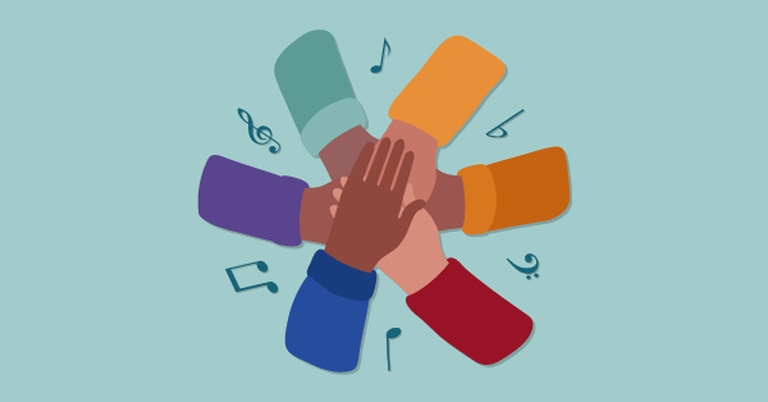
Who can disagree with the idea that students will be more successful in class (and in life) if they can understand and manage themselves; relate effectively to other people and acknowledge their perspectives, and make constructive choices for themselves personally and for the greater social good?
Alicia DeSoto & Chris Meredith are currently band directors at Lewisville High School in Lewisville ISD, TX.
Literacy: the ability to read and write
Music Literacy: the ability to read, write, and play music
What can we do as music educators to develop music literacy in our classrooms, with the same level of detail and care that elementary school teachers pour into their young readers and writers?
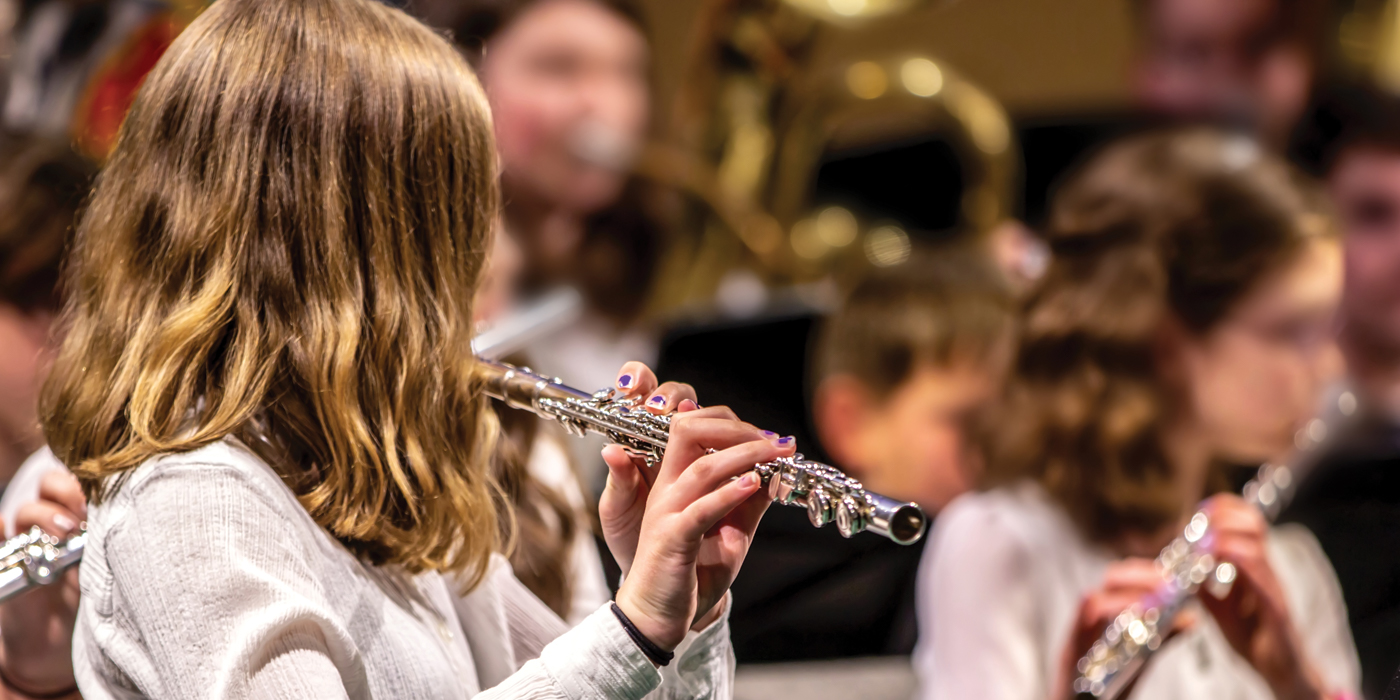
Every director has an idea of what their dream rehearsal would look like. One can imagine it includes a group of focused, organized, and enthusiastic students all of whom came to class on time, prepared, and ready to learn.
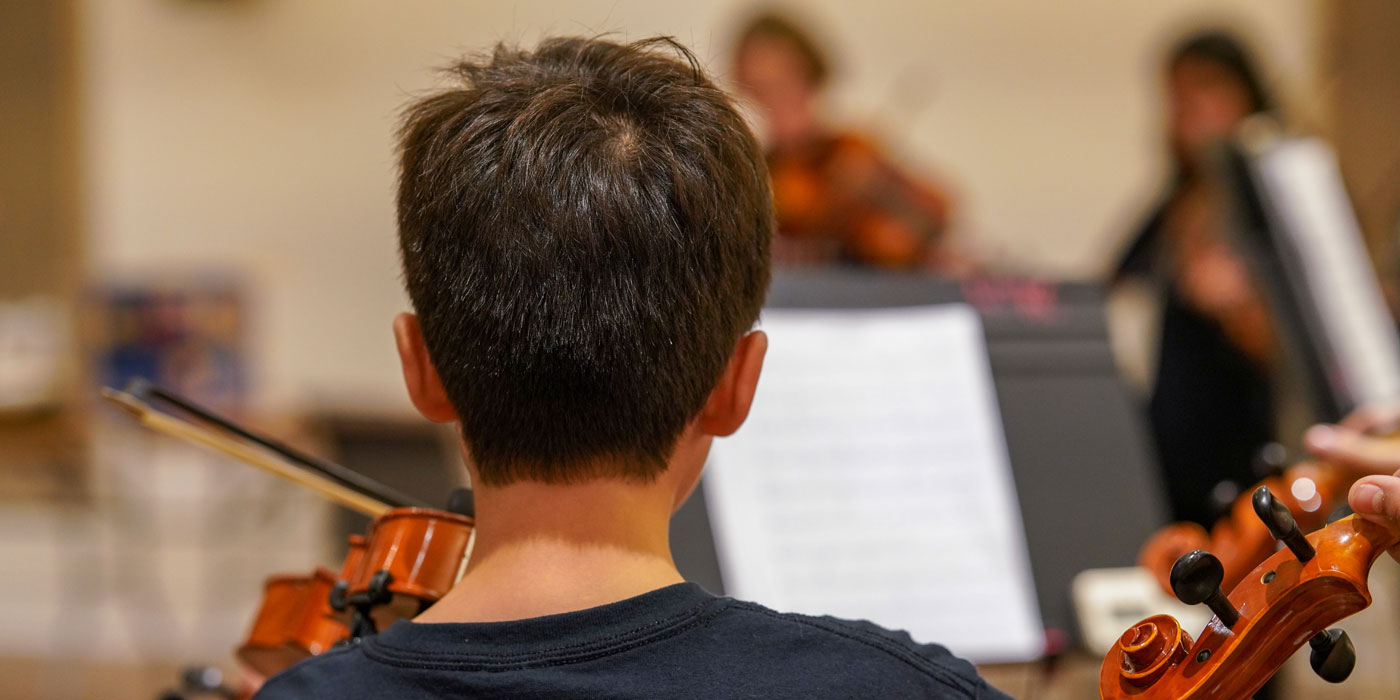
True music literacy extends beyond symbol recognition to actually being able to internally conceptualize the sounds that the symbols represent.
It is a musician’s job to synthesize rhythms, note names, pitches, articulations, expressions, sound, and more…all at once. Dr. Anita Collins, who is an educator, researcher, and writer in the field of brain development and music learning, says that “playing music is the brain’s equivalent of a full body workout.” Applying all of those skills when you are learning a new piece of music can feel particularly daunting.