
You already know the job description doesn’t capture half of it.
Yes, you’re a music educator, but you’re also a counselor, mediator, mentor, coach, cheerleader, schedule-juggler, and, on some days, a miracle worker.
You already know the job description doesn’t capture half of it.
Yes, you’re a music educator, but you’re also a counselor, mediator, mentor, coach, cheerleader, schedule-juggler, and, on some days, a miracle worker.

The Midwest Clinic takes place December 16-18, 2026, and even though it is already August, it’s never too early to start planning your Midwest trip!

You’re mid-lesson. A student’s account isn’t loading, or you can’t figure out why your assignment didn’t push to the whole class.

Welcome back teachers and directors! The start of a new school year is filled with energy and excitement, but let’s be honest, it can also be filled with administrative hurdles.
The first few weeks of choir class set the tone for the entire year, and those first few minutes set the tone for the rest of class.

You know this student, though “know” is a funny word for it, because they’ve made a quiet art out of not being noticed.
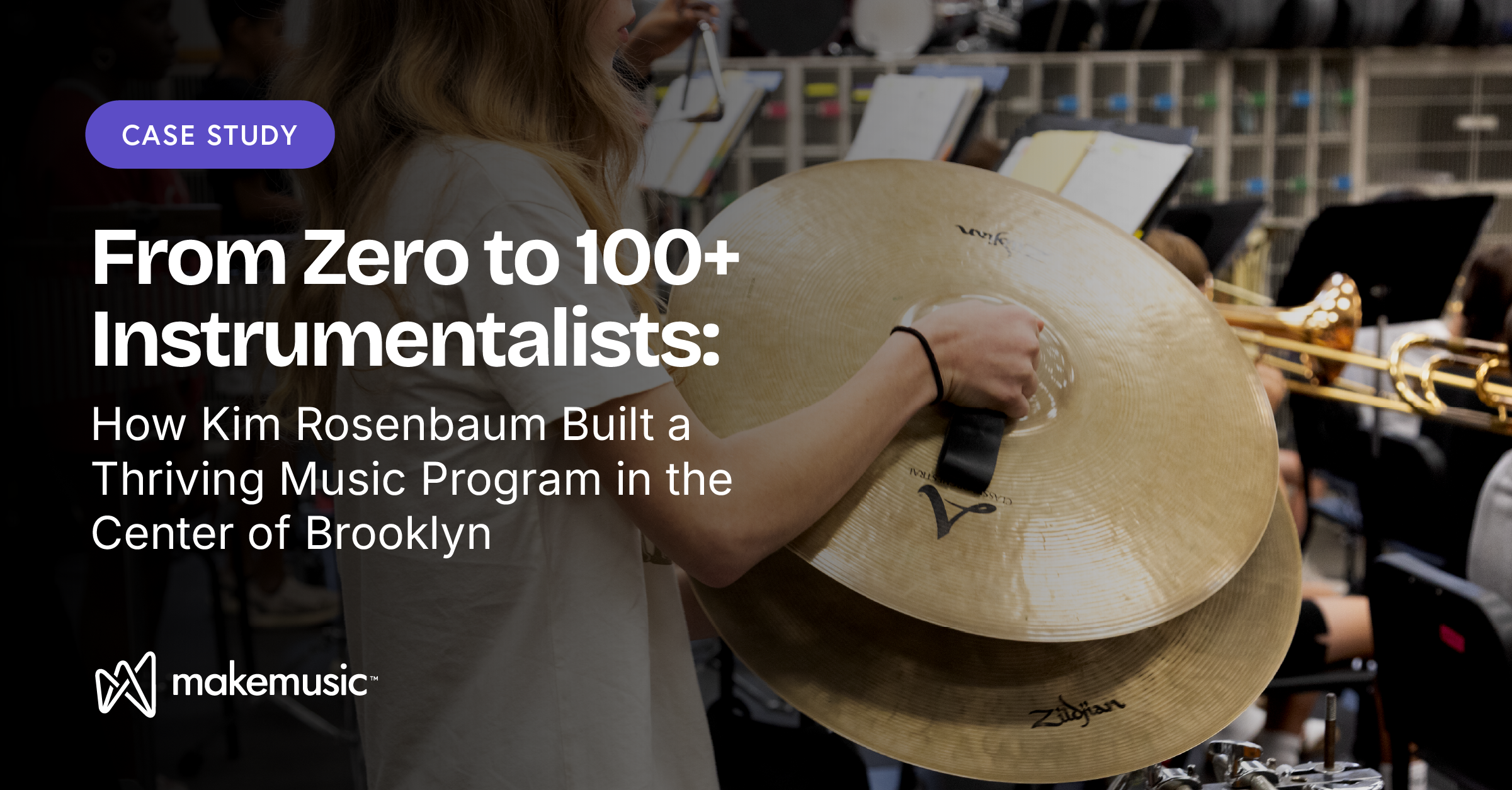
When Kimberly Rosenbaum walked into P.S. 197, The King’s Highway Academy, in central Brooklyn six years ago, she was met with an ambitious goal from her administration: build an instrumental music program from scratch.

You know this student, too. Maybe there’s an IEP in the file, or a learning difference that never got a formal name, or a home situation that makes “practice 20 minutes a night” a nonstarter through no fault of their own.

Teacher Pain Point: “I don’t have the budget, the venue, or a massive feeder program to build a thriving music department.”
When Chelsey Sweatman walked into Bridgetown Middle School 12 years ago, the choir program was practically non-existent.

You got into teaching music because you love music. You love the moment a section finally locks in on a chord, the look on a student’s face when a tough passage clicks, the energy of a great rehearsal.