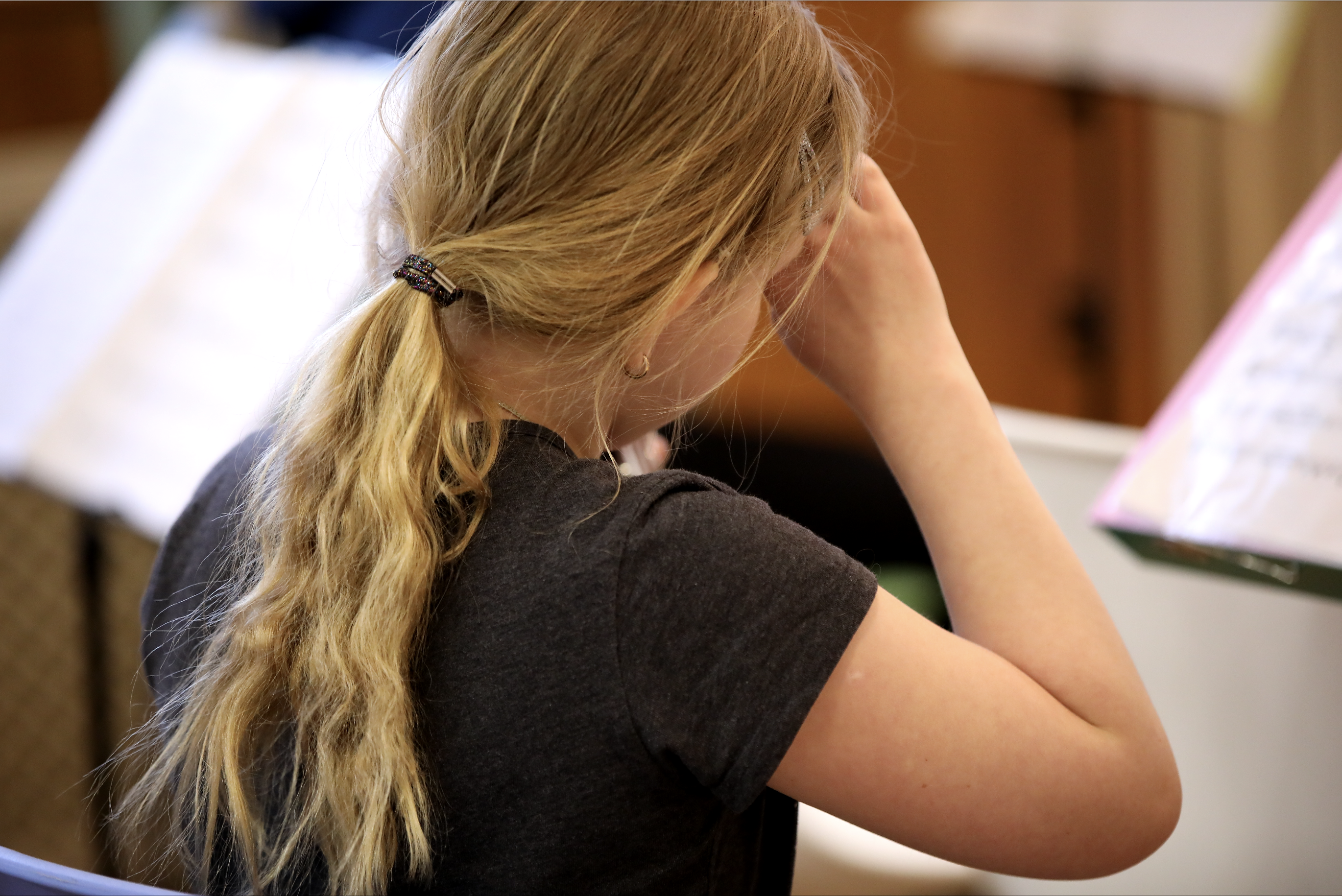
You know this student, too. They’re not a bad kid; they’re just unconvinced. The instrument goes in the case in October and doesn’t come back out unless you’re standing right there. They’re rarely a behavior problem because honestly, they might just be here to hang out with their friends. They do the minimum, they don’t cause trouble, and somewhere around February you realize you haven’t heard them actually try since the fall concert.
You don’t want to chase them down every week; you don’t have the time, and it wouldn’t work anyway. Nagging has never once turned a reluctant player into a musician. What you want is something that pulls them in on its own, a reason to open the case that doesn’t depend on you standing next to it, and a feedback loop that makes getting better feel worth the effort.
Here’s how to build that.
Why Unmotivated Students Stay Unmotivated
Most reluctant players aren’t reluctant because they dislike music. They’re reluctant because practice, as they’ve experienced it, is a terrible deal: sit alone in your room, play something you didn’t choose, sound bad at it, and receive no feedback until rehearsal, where the feedback might be public. No wonder the case stays shut.
Compare that to everything else competing for their attention. Games, sports, and social apps all deliver the same loop: clear goal, immediate feedback, visible progress, and usually friends alongside. Practice, done the traditional way, delivers none of the four. The student isn’t broken. The loop is.
There’s a second truth worth naming: for a lot of these students, the friends are the point, and that’s not a flaw to fix. Social belonging is one of the most durable reasons students stay in music programs. The goal isn’t to replace “I’m here for my friends” with something nobler. It’s to make sure that while they’re here, playing starts feeling as good as belonging does.
Signs You Have One to Win Over
These students rarely announce themselves. The signals hide inside “fine”:
- The instrument only comes out when you’re watching
- Assignments come in late, minimal, or clearly sight-read that morning
- They’re animated before rehearsal and flat during it
- “I forgot my instrument” is becoming a pattern, not an accident
- They never choose to play: no noodling, no requests, no curiosity
- They’re socially central in your program but musically anonymous
- Their progress flatlined months ago, and neither of you has said it out loud
One of these is a regular Tuesday. Three or four from the same student is a sign you have a much bigger problem, because the student who’s coasting this semester is the one weighing whether to re-enroll next year.
Strategies for Winning Them Over
The temptation is accountability: more checks, more consequences, more chasing. But pressure gets you compliance at best, and compliance sounds exactly like it plays. What actually moves these students is pull and a few strategies reliably create it:
Let the Music Do the Recruiting
Nothing re-opens a case like a song the student already loves. Give reluctant players some genuine choice in what they work on, even one self-picked piece alongside the assigned repertoire changes the relationship. Familiar music also comes with a built-in model of what “good” sounds like, which quietly teaches phrasing and self-correction while they think they’re just having fun.
Shrink the Ask
“Practice 30 minutes a day” is a fantasy for this student, and both of you know it. Ask for five minutes, one line, one win. Small asks get started, and starting is the whole battle; from there, momentum does the rest. A short streak they actually keep beats a long plan they abandon by Thursday.
Make Progress Visible
Reluctant players almost never believe they’re improving because they have no evidence. Give them some. Record a passage now and again in three weeks. Point at the specific thing that got better. Progress a student can see is the single most convincing argument that effort pays, far more convincing than anything you can say.
Use the Friends, Don’t Fight Them
If they’re here for their people, put their people to work. Practice buddies, section challenges, duet assignments with the friend they sit next to anyway, anything that makes playing a social activity instead of a solitary chore. The student who won’t practice alone will absolutely show up for a section that’s counting on them.
How MakeMusic Cloud Helps
MakeMusic Cloud is a music education platform built to give every student in your room a way to practice, perform, and get feedback without needing your direct attention every minute. For the one you’re trying to win over, that means the pull (the music, the feedback, the streak) is built in, and none of it requires you to hover.
Start With Music They Actually Know
The Music Catalog has more than 20,000 titles, and that includes the music your reluctant player already has on repeat: Taylor Swift, Bruno Mars, even Steve’s Lava Chicken. Playing along with a song they love isn’t a reward for practicing. It is practicing; they just won’t file it that way.
Make Fundamentals Feel Like a Movie
The Foundations Series by Brian Balmages pairs targeted fundamental exercises with cinematic soundtrack accompaniments, so the long tones and scale patterns that usually empty the room come wrapped in music that feels like a trailer. For a student who finds traditional technique work pointless, it’s the difference between eating vegetables and not noticing them.
Give Them a Streak Worth Keeping
Dori, MakeMusic’s in-app practice companion, tracks practice streaks and celebrates milestones along the way. For a student who’s never cared about a grade, a live streak is a different kind of motivator, the same consistency loop that keeps them coming back to everything else on their phone, pointed at their instrument instead.
Show Them Exactly What They Nailed
Real-Time Practice Assessment gives note-by-note feedback on pitch and rhythm the moment they play. No waiting for rehearsal, no public correction, just immediate, private evidence of what worked and what to fix. That’s the feedback loop practice has always been missing, and it’s exactly what makes improvement feel worth chasing.
Catch the Quiet Fade Before It Becomes a Goodbye
The Gradebook shows you who’s practicing, what they’ve completed, and who’s gone quiet — without you collecting a single practice log. When a student’s activity drops off, you see it in days, not months, and a two-minute conversation now beats a lost enrollment in May. Retention problems don’t announce themselves; the Gradebook does.
Try MakeMusic Cloud for Free
Give yourself the opportunity to explore what MakeMusic Cloud can do for you and your students — especially the ones still deciding whether music is their thing. Our free 14-day trial is the best way to start!
FAQ
How do I motivate a music student who won’t practice? Change the deal, not the volume of reminders. Let them work on music they already love, shrink the daily ask to something they’ll actually start, and give them immediate feedback and visible progress. Pull works where pressure doesn’t.
What do I do about a student who’s only in band or choir for their friends? Keep the friends — they’re a retention asset, not a problem. Make playing more social with practice buddies and section challenges, and use engaging repertoire and quick feedback loops so the music starts pulling its own weight alongside the social draw.
How can I tell which students aren’t practicing before it’s too late? Use tools that track practice automatically. A gradebook that shows completion and activity lets you spot a student going quiet within days, so you can step in with a conversation — or a better-fitting assignment — long before they decide not to come back next year.