Strong sight readers learn music faster, rehearse more efficiently, and walk into the festival sight reading room with confidence instead of dread. Even more important, reading independently is what lets students keep making music long after they leave our classrooms, whether that’s in a community band, a church choir, or a garage jam with friends.
The catch is that reading only improves with steady practice on music students haven’t seen before. Method books can only hold so many exercises, and after a few passes through a page, students stop reading the notes and start remembering them.
MakeMusic’s new correlated sight reading templates solve that problem. They turn the method books you already teach into an unlimited supply of fresh sight reading.
What are Correlated Sight Reading Generators?
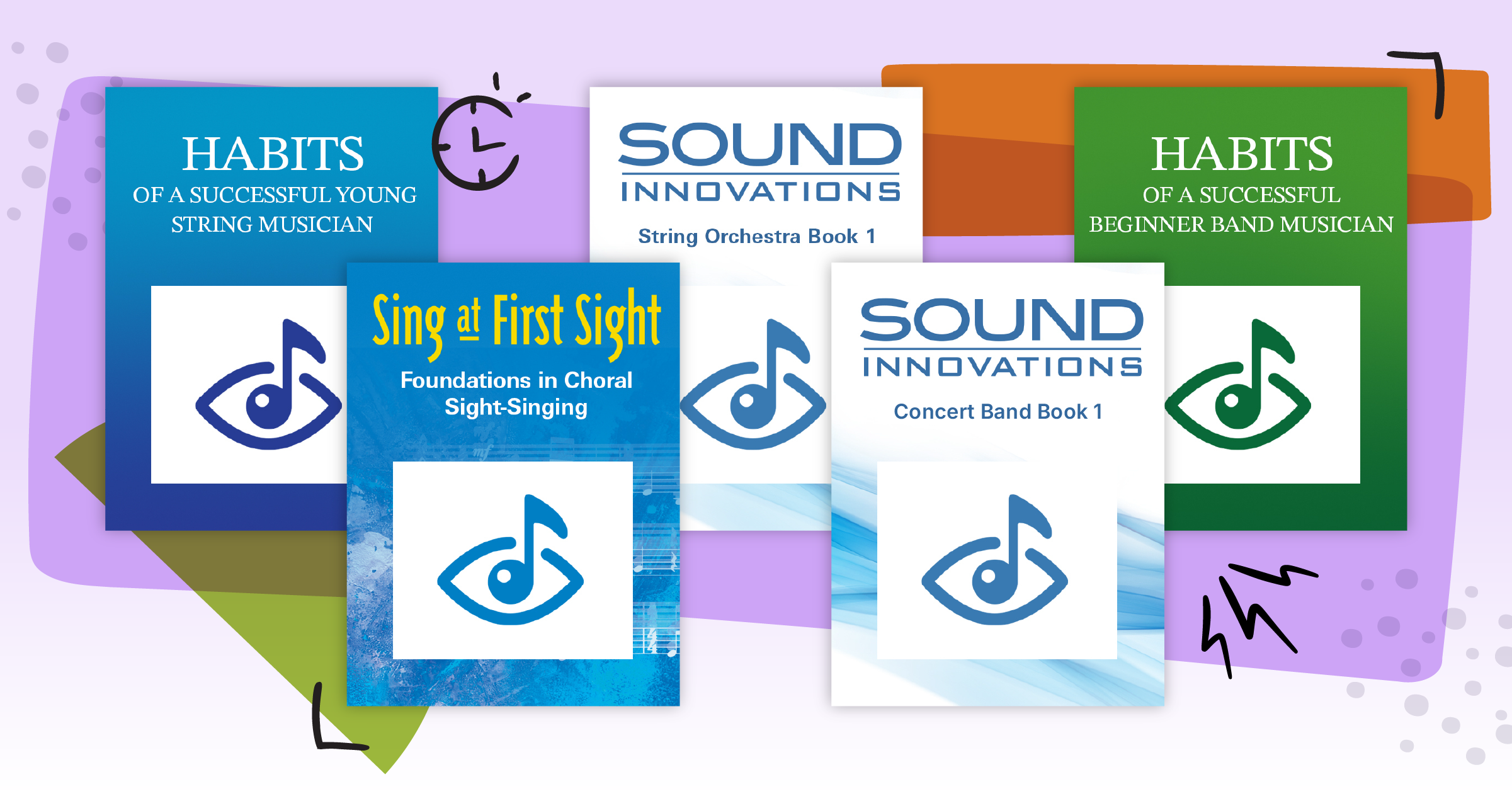
These are pre-built Sight Reading Studio templates, found right in the MakeMusic library and aligned lesson by lesson with three trusted methods:
- Habits of a Successful Musician, Book 1 from GIA Publications, the fundamentals-time favorite known for its sequential path to rhythm reading and sight-reading.
- Sound Innovations, Book 1 from Alfred Music, the beginning method organized into short levels with clear benchmarks.
- Sing at First Sight by Andy Beck, Alfred Music’s step-by-step sight-singing method.
How you use it: Choose the template that matches where your students are in the book and click generate. You get a brand-new exercise built around the skills from that lesson. Click again, and you get another. No writing notation, no hunting for leveled material, no setup.
In the Classroom
- Warm-ups in minutes. Project an exercise for the full ensemble at the top of rehearsal. Adjust the tempo, play a starting pitch, or toggle the accompaniment and keep things moving.
- Read, don’t recall. Try a “cold read, warm read” routine. Students read an exercise cold, talk through what tripped them up, then tackle a fresh exercise at the same level to apply the fix right away.
- Reinforce today’s lesson. Just introduced dotted quarter notes in Sound Innovations or a new interval in Sing at First Sight? Open that lesson’s template and run three quick reads to lock in the concept.
- Build festival confidence. Several new exercises in a row build the stamina and poise students need in the sight reading room.
At Home
- Instant feedback. Assign a template through MakeMusic Cloud. When students record, they see exactly where they went sharp, flat, or off the beat.
- Differentiate with ease. Give students who need reinforcement an earlier lesson’s template, and push advanced players with a later one. Same book, individual paths.
- Real accountability. Every student gets an exercise they’ve never heard, so their assessment reflects what they can truly read on their own.
- A daily habit. Encourage a five-minute “sight read a day” routine. Students will never run out of new material.
Get Your Prep Time Back
Writing or finding leveled sight reading can eat up hours every week. Correlated generators handle that work for you, so your energy goes into teaching, not copying notes onto the board. And because the templates follow your method’s sequence, sight reading becomes a natural extension of what students learn each day instead of a separate activity.
Get Started
Log in to MakeMusic Cloud and explore the correlated sight reading templates. Find your method book, jump to your current lesson, and give your students something new to read today.